 Gilbert, construction was finished in 1935. Although the first session of Supreme Court was held in 1790, the official building was not built much later on. At first, Supreme Court was held in the Royal Exchange Building of New York, but was moved to Independence Hall, and later to Philadelphia's City Hall. When the capitol was moved to Washington D.C., the supreme court was given space in the Capitol Building. From 1860 to 1935, when the new Supreme Court Building was finished, the Old Supreme Court Chamber was used to hold court sessions, but in 1929, President William Taft, who was once a Supreme Court Justice, persuaded Congress to give the Supreme Court a permanent home. The building was built on a scale to give the Judicial Branch of government the same look of dignity as the other two branches of government. Above the 16 columns on the west entrance, are the words, "Equal Justice Under Law", and the west entrance doors are cast in bronze. The east entrance of the building has the words "Justice the Guardian of Liberty" above it. On May 4th [Today] in 1987, the Supreme Court building was designated a National Historic Landmark.
Tuesday, May 4, 2010
The U.S. Supreme Court Building
In the year, 1932, construction on the U.S. Supreme Court Building started. Designed by Cass Gilbert, construction was finished in 1935. Although the first session of Supreme Court was held in 1790, the official building was not built much later on. At first, Supreme Court was held in the Royal Exchange Building of New York, but was moved to Independence Hall, and later to Philadelphia's City Hall. When the capitol was moved to Washington D.C., the supreme court was given space in the Capitol Building. From 1860 to 1935, when the new Supreme Court Building was finished, the Old Supreme Court Chamber was used to hold court sessions, but in 1929, President William Taft, who was once a Supreme Court Justice, persuaded Congress to give the Supreme Court a permanent home. The building was built on a scale to give the Judicial Branch of government the same look of dignity as the other two branches of government. Above the 16 columns on the west entrance, are the words, "Equal Justice Under Law", and the west entrance doors are cast in bronze. The east entrance of the building has the words "Justice the Guardian of Liberty" above it. On May 4th [Today] in 1987, the Supreme Court building was designated a National Historic Landmark.
Gilbert, construction was finished in 1935. Although the first session of Supreme Court was held in 1790, the official building was not built much later on. At first, Supreme Court was held in the Royal Exchange Building of New York, but was moved to Independence Hall, and later to Philadelphia's City Hall. When the capitol was moved to Washington D.C., the supreme court was given space in the Capitol Building. From 1860 to 1935, when the new Supreme Court Building was finished, the Old Supreme Court Chamber was used to hold court sessions, but in 1929, President William Taft, who was once a Supreme Court Justice, persuaded Congress to give the Supreme Court a permanent home. The building was built on a scale to give the Judicial Branch of government the same look of dignity as the other two branches of government. Above the 16 columns on the west entrance, are the words, "Equal Justice Under Law", and the west entrance doors are cast in bronze. The east entrance of the building has the words "Justice the Guardian of Liberty" above it. On May 4th [Today] in 1987, the Supreme Court building was designated a National Historic Landmark.

Sunday, May 2, 2010
Henry VIII's 6 Wives
Today in History:
Today [May 2nd] was the day that in 1536, Anne Boleyn, Queen of England, was imprisoned on the charges of adultery, incest, treason, and witchcraft. Anne Boleyn was one of the 6 wives that Henry VIII (1491-1547) of England had during his lifetime.After his accession to the throne, Henry married Catherine of Aragon on June 11, 1509. Henry was desperate for a male heir for the throne, so he had many children through Catherine, but all the boys she gave birth to died soon after they were born. Cathrine of Aragon did, however, produce Mary, who would later become the Queen of England. After having many attempts to have a male heir through Catherine, Henry VIII decided he needed a wife who would have a son, but when he tried to declare his marriage to Catherine invalid, Pope Clement refused to grant the annulment. Henry, after six years, finally pulled England away from the Catholic Church and formed the Church of England, and married Anne Boleyn on January 24, 1533. His previous marriage to Cathrine of Aragon was declared invalid by Thomas Cranmer, the Archbishop of Canterbury. Anne Boleyn was crowned queen on the first of June of that year. Anne went on to give birth to Elizabeth, who, like Mary, would become the queen of England. Three years later, on May 2, 1536, after Anne Boleyn is unable to have a son, Henry accused her of adultery, incest, treason, and witchcraft, and had her thrown into the Tower of London, where she was beheaded on May 19, 1536. The day right after Anne was behead
 ed, Henry VII proposed to Jane Seymour, Anee Boleyn's lady-in-waiting, and they were married ten days later. To Jane Seymour, Henry had his only legitimate, male heir, Prince Edward, who would become king after Henry, on October 12, 1537. Twelve days after Edward was born, Seymour died of post-natal fever. Three years after Jane Seymour died, Henry got a new wife, named Anne of Cleves, who was the sister of William, the Duke of Cleves in Germany. The wedding, held on January 6, 1540, cemented the alliance between the Protestant German princes and England against Charles V of the Holy Roman Empire. Henry called Anne of Cleves the 'Flanders Mare' because he said that in person, she looked like a mare. In the summer of 1540, the marriage was ended with another divorce, and Henry married Cathrine Howard on July 28, 1540, less than three weeks after his divorce. After discovering of Cathrine's premarital affairs, he had her beheaded at London Tower on February 13, 1542. Henry's last wife, Cathrine Parr, came on July 12, 1543, who helped Henry in his last years. She took good care of Mary, Elizabeth, and Edward and oversaw their education. Before Henry died, he asked to be buried beside Jane Seymour. Cathrine Parr outlived the king, and married a fourth husband, Lord Thomas Seymour.
Information From...
Kings & Queens of Britain
Charles Phillips
Today [May 2nd] was the day that in 1536, Anne Boleyn, Queen of England, was imprisoned on the charges of adultery, incest, treason, and witchcraft. Anne Boleyn was one
 of the 6 wives that Henry VIII (1491-1547) of England had during his lifetime.After his accession to the throne, Henry married Catherine of Aragon on June 11, 1509. Henry was desperate for a male heir for the throne, so he had many children through Catherine, but all the boys she gave birth to died soon after they were born. Cathrine of Aragon did, however, produce Mary, who would later become the Queen of England. After having many attempts to have a male heir through Catherine, Henry VIII decided he needed a wife who would have a son, but when he tried to declare his marriage to Catherine invalid, Pope Clement refused to grant the annulment. Henry, after six years, finally pulled England away from the Catholic Church and formed the Church of England, and married Anne Boleyn on January 24, 1533. His previous marriage to Cathrine of Aragon was declared invalid by Thomas Cranmer, the Archbishop of Canterbury. Anne Boleyn was crowned queen on the first of June of that year. Anne went on to give birth to Elizabeth, who, like Mary, would become the queen of England. Three years later, on May 2, 1536, after Anne Boleyn is unable to have a son, Henry accused her of adultery, incest, treason, and witchcraft, and had her thrown into the Tower of London, where she was beheaded on May 19, 1536. The day right after Anne was behead
 ed, Henry VII proposed to Jane Seymour, Anee Boleyn's lady-in-waiting, and they were married ten days later. To Jane Seymour, Henry had his only legitimate, male heir, Prince Edward, who would become king after Henry, on October 12, 1537. Twelve days after Edward was born, Seymour died of post-natal fever. Three years after Jane Seymour died, Henry got a new wife, named Anne of Cleves, who was the sister of William, the Duke of Cleves in Germany. The wedding, held on January 6, 1540, cemented the alliance between the Protestant German princes and England against Charles V of the Holy Roman Empire. Henry called Anne of Cleves the 'Flanders Mare' because he said that in person, she looked like a mare. In the summer of 1540, the marriage was ended with another divorce, and Henry married Cathrine Howard on July 28, 1540, less than three weeks after his divorce. After discovering of Cathrine's premarital affairs, he had her beheaded at London Tower on February 13, 1542. Henry's last wife, Cathrine Parr, came on July 12, 1543, who helped Henry in his last years. She took good care of Mary, Elizabeth, and Edward and oversaw their education. Before Henry died, he asked to be buried beside Jane Seymour. Cathrine Parr outlived the king, and married a fourth husband, Lord Thomas Seymour.
Information From...
Kings & Queens of Britain
Charles Phillips
Saturday, May 1, 2010
The Philippine Peso
Today in History:
In 1852, today (May 1st), the Philippine Peso was first put into circulation. During the Spanish colonial period in the Philippines, silver and copper coinage was the type of c urrency, based on a peso of 8 reales, with subdivisions of quarto and octavo real. This all changed in 1852 when the currency was reformed around a peso consisting of 100 centimos, which had the head of a monarch on one side and the crowned arms on the other. Under American rule in 1898, the currency changes to a peso of 100 centavos. The peso of 100 centavos had the picture of Liberty on one side and an eagle with a shield on the other. In 1935, when the Commonwealth of the Philippines was proclaimed, the eagle and the shield were taken off the currency. After being occupied by Japan in 1941 and being liberated in 1944-1945, the Philippines became a republic in July of 1946. After having picture changes on the coins in 1947 and 1958, a series of coin was released in 1967 portraying national heroes. The names of the peso and the centavos were also changed to the piso and the sentimo in 1967. The current coins that are seen today were introduced in 1995. The United States Dollar is currently worth about 44 Philippine Pesos, and in itself, shown much of the history of the Philippines.
Information From...
The Complete Illustrated Guide to Coins & Coin Collecting
By Dr. James Mackay
In 1852, today (May 1st), the Philippine Peso was first put into circulation. During the Spanish colonial period in the Philippines, silver and copper coinage was the type of c
 urrency, based on a peso of 8 reales, with subdivisions of quarto and octavo real. This all changed in 1852 when the currency was reformed around a peso consisting of 100 centimos, which had the head of a monarch on one side and the crowned arms on the other. Under American rule in 1898, the currency changes to a peso of 100 centavos. The peso of 100 centavos had the picture of Liberty on one side and an eagle with a shield on the other. In 1935, when the Commonwealth of the Philippines was proclaimed, the eagle and the shield were taken off the currency. After being occupied by Japan in 1941 and being liberated in 1944-1945, the Philippines became a republic in July of 1946. After having picture changes on the coins in 1947 and 1958, a series of coin was released in 1967 portraying national heroes. The names of the peso and the centavos were also changed to the piso and the sentimo in 1967. The current coins that are seen today were introduced in 1995. The United States Dollar is currently worth about 44 Philippine Pesos, and in itself, shown much of the history of the Philippines.
Information From...
The Complete Illustrated Guide to Coins & Coin Collecting
By Dr. James Mackay
Friday, April 30, 2010
Louisiana Purchase

Today in History:
On April 30, 1803, the Louisiana Purchase was sold to the United States by France. Although France had ceded the territory to Spain in 1762, the Treaty of San Ildefonso, signed in 1800, regained the Louisiana Territory. Napoleon Bonaparte (1769 – 1821), or Napoleon I of France, was set on creating an French Empire in America along with a French Empire in Europe. This American Empire was going to be centered around the island of Hispaniola. Unfortunately, Haitian slaves under Toussaint L'ouverture (1743-1803) had revolted and taken over the city of Santo Domingo on Hispaniola. Although Napoleon had sent an army to put down the rebellion, many soldiers died in battle and of yellow fever. This destroyed Napoleon's American Empire dream, so he decided to sell the land to help fund his military in France. Although President Thomas Jefferson of the United States had already sent James Monroe and Robert R. Livingston to negotiate the purchase of a portion of the land, he was delighted when Napoleon offered the whole territory to him. The purchase was sold on this day for 60 million francs or about $15 million. The land was 2 million sq. kilometers (800,00 sq. miles) stretching from the Mississippi River to the Rocky Mountains. This doubled the size of the United States and lead it to expansion across North America. It is strange to think what might have happened if Napoleon had stopped the slave revolt and started the American Empire of France. The United States would be limited to the East Coast of North America and France would have a very large influence on the culture of all of the Americas.
Information from...
http://www.gatewayno.com/history/LaPurchase.html
Tuesday, April 13, 2010
Ontario's CN Tower

The Communications Network Tower (The CN Tower) is a tower standing high over the city of Toronto, Canada. This great tower was created by a private company called CN Tower Ltd, an affiliate of Canadian National Railways. A revolving restaurant sits near the top, at 1,148 ft (350m), just above this, there is an observation deck at 1,509 ft (460m) high, but what makes this building great is that its spire is at 1,816 ft (553m) high, making it the third tallest tower in the world (not including guyed masts and drilling platforms). The tower is only behind TV & Sightseeing Tower and the Burj Khalifa. The construction of the CN Tower began in February 1973 and finished in
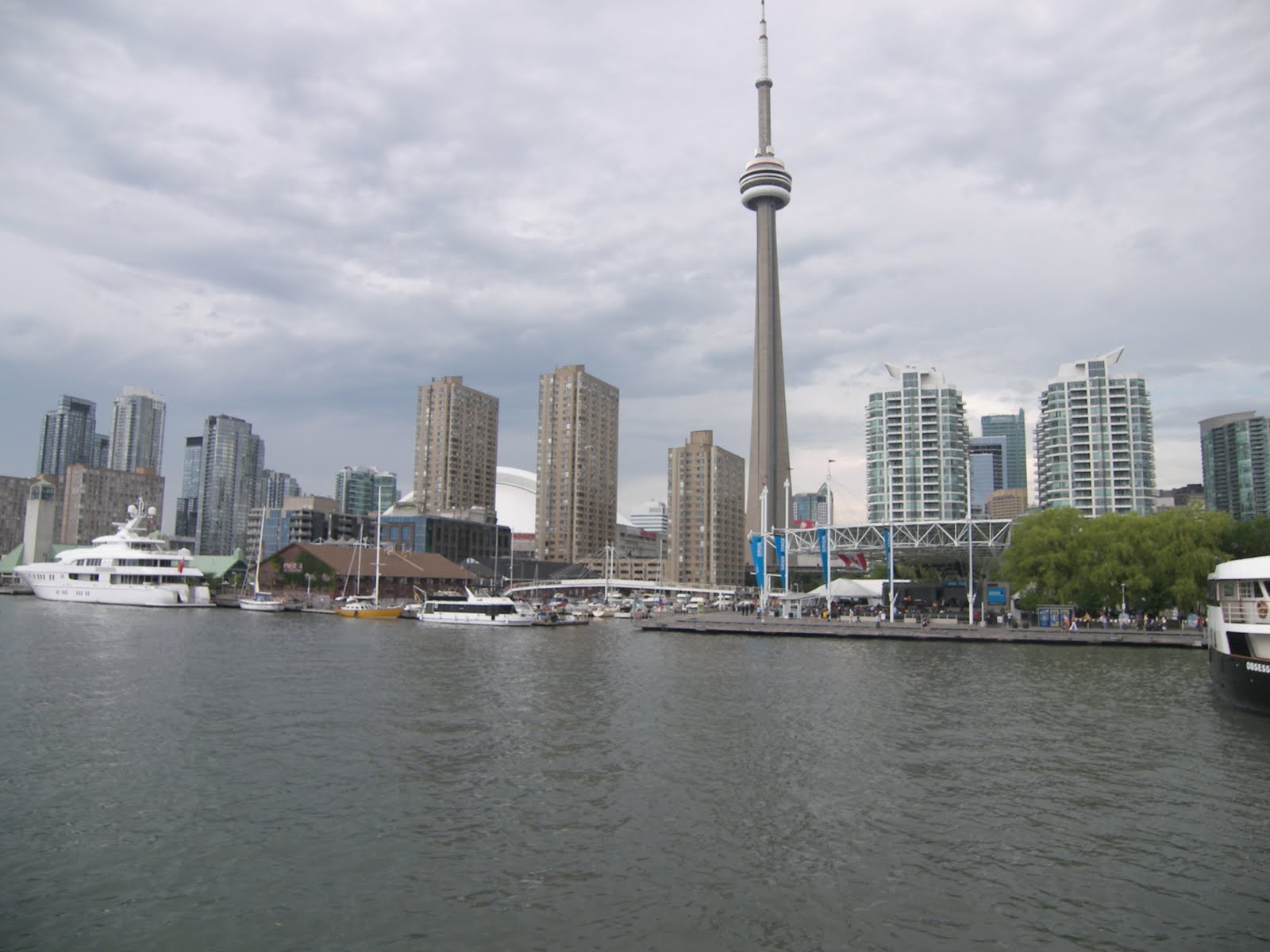
The floor of the bottom observation deck is made of glass, fully of glass, but because of the height, some people refused to get out of the elevator when they saw the ground, the floor was carpeted except for one small area of the floor, where people still look down at the ground in amazement. The CN Tower now is the regarded as the most artistically significant telecommunications tower and as the symbol of Toronto.
Sunday, April 11, 2010
England's Palace of Westminster
In 1834, the old House of Parliament in London burned down. A year late r, a design competition was announced, stating that the building had to be of Gothic or Tudor design, which was bad for all the leading architects, who all built classical buildings. The winner of this competition was Charles Barry, who also made buildings of classical design, but was able to create a Gothic design as requested. The building included new chambers for the Commons and the Lords, along with smoking rooms, kitchens, and libraries. The building ended up being 914ft (289m) long with two main towers, the Victoria Tower to the south and the Clock Tower (holding Big Ben) to the north. Big Ben, the bell in the clock tower, is probably the most famous part of the Palace, but took much time to get wo
 rking. At first, the casting broke, and the bell was not raised until
 r, a design competition was announced, stating that the building had to be of Gothic or Tudor design, which was bad for all the leading architects, who all built classical buildings. The winner of this competition was Charles Barry, who also made buildings of classical design, but was able to create a Gothic design as requested. The building included new chambers for the Commons and the Lords, along with smoking rooms, kitchens, and libraries. The building ended up being 914ft (289m) long with two main towers, the Victoria Tower to the south and the Clock Tower (holding Big Ben) to the north. Big Ben, the bell in the clock tower, is probably the most famous part of the Palace, but took much time to get working. At first, the casting broke, and the bell was not raised until
 1858, and then drowned out the parliamentary speakers, and soon before it was planned to be taken out, an adjustment of the hammer fixed the problem. Charles Barry had another man,
Augustus Welby Pugin, worked on the interior of the Palace. After many years of problems and having to garrison the building to withstand a siege, the Lords and Commons were both finally installed in their chambers in 1852. The whole building was finally finished in 1867, and now stands as one of the greatest sights in London, with the Clock Tower standing high over much of the city.
Saturday, April 10, 2010
The Elephant Seal
 This blog is called the History Dropoff because it is where I drop off facts on mainly history, but I use this blog to keep my family from having to listento me, so I also dropoff other information, like this post.
The Elephant Seal is a species of seal that comes in two types of species. The Northern Elephant Seal is known as Mirougna angustirostris and lives on the coast of California and Mexico, while the Southern Elephant seal, Mirougna leonina, lives only in the southern hemisphere, in places such as New Zealand, South Georgia, Antartica, etc. Elephant seals are marine mammals that come together only to breed. The Northern variety breed in January and February, but the Southern species mates from September to October. Although Elephant Seals are clumsy on land, they can swim with great power deriving from the alternating hind flippe
 rs, which they can use to catch fish and squid. The most unique feature of an elephant seal is its large nasal cavity, which only appears on males and takes 8 years it to fully develop. During mating season, the cavity fills with blood and is able to amplify aggressive roars. Along with having an odd nose, male elephant seals also have many other traits that females do not, which the bulls use during battles for dominance. Males can weigh up to 2300kg more than a female, weighing in at about 3200kg (7055lb). Males are also longer than females and can be 4.9m (16ft) long. Other outstanding battle traits used by bull Elephant Seals are tough neck skin acquired as a youth and enlarged canines. Elephant seals can have cubs when the male is 4 to 6 years old and the female is 2 to 3 years old, and after 11 months, the seal gives birth to a youth, which will hopefully live for another 20 years. Although Hooded seals (Cystophora cristata) also have traits like those of an Elephant Seal, they're not as large as Elephant seals, and their nasal cavities are no match to those of an Elephant Seals, the Elephant of the Sea.
Infromation from...
The Encyclopedia of Animals
Consultant Editor: Dr. Per Christiansen
Subscribe to:
Posts (Atom)